
Understanding The Quicksand Model® of Coercive Control
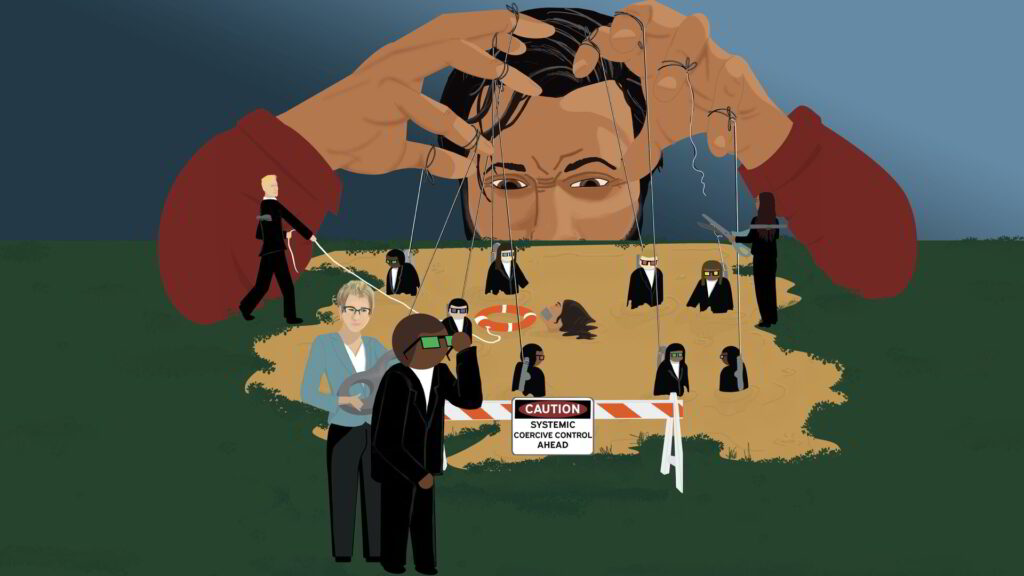
The Quicksand Model® of Coercive Control is a groundbreaking training program designed to make the often invisible tactics of coercive control visible and understandable. This model synthesizes 70 years of research and theory across various fields, including domestic abuse, human trafficking, cults, extremism, and trauma, to provide professionals with the tools needed to detect, intervene […]
Could criminalizing coercive control further harm female victims?

In response to the question “Could criminalizing coercive control further harm female victims?” the concise answer is a resounding yes. This concern is frequently voiced by global domestic violence organizations when survivors seek legislative changes to outlaw coercive control. While this apprehension is valid, it’s worth noting that from the 1970s onwards, as domestic violence […]
Is coercive control intentional?
Coercive controllers are the puppeteers of manipulation! Every strategy they employ against their chosen victims at the start of the “relationship” to fabricate The Mirage, is also utilized on friends, family, and anyone within their surrounding circle. The implementation of these coercive control tactics usually intensifies when their main target begins to comprehend the abuse. However, […]
Coercive Control Research Study Opportunity

This research study on coercive control is being conducted by Kacey Baker, a master’s student in the psychology of coercive control program at the University of Salford. If you have been targeted by coercive control, please consider participating. Here are the important details: I am a researcher from The University of Salford conducting a study […]
What are the signs of coercive control?

Coercive control is a complex, nuanced, and dangerous pattern of abuses of power. It is the pattern of behavior that establishes and maintains oppression, and it is often said to be invisible in plain sight. In order to be able to see the signs of coercive control, we need to understand the biological, psychological, and […]
Context is King in Cases of Coercive Control & Domestic Violence
Commencing prior to 1970, the battered women’s movement, spearheaded by survivors and driven by aspirations to diminish domestic violence and safeguard women seeking refuge, initially framed domestic violence through a lens that persists in law enforcement and the legal system today. This lens, known as the violent incident model, continues to shape perceptions and responses to domestic […]
Victim or Victim Mentality? The Karpman Triangle & Coercive Control
Have you ever found yourself unjustly shouldering the blame for the actions of your coercive controller? Victim-blaming is a pervasive issue, particularly in cases involving coercive control. Unveiling the invisible nature of coercive control is crucial to understanding this phenomenon. Despite its prevalence, coercive control remains unnoticed in plain sight. Imagine a scenario where evidence […]
Consent & Coercive Control
Coercive control laws are being proposed and passed around the world. Laws that define coercive and controlling behaviors began in the UK, and Australia, Scotland, Canada and the US are taking steps to address coercive control in criminal and/or civil legislation. But coercive control legislation is moving slowly, and I believe one big reason for that is not that we haven’t defined […]
Partnership Systems vs Domination Systems & Coercive Control
This blog is a shout out to my colleague Elle Kamihira for her podcast Subject to Power and the terrific interview she conducted with Riane Eisler, titled Systems of Peace. As I continue to develop my Quicksand Model™ of Coercive Control I often come across new, and not so new, research and theories that are compatible and useful enhancements to my model. […]
#Gaslighting – Webster’s Word of the Year for 2022!
Gaslighting is the term used for harming a person through manipulation and deception in order to make them believe they are going crazy. Webster defines it as: “psychological manipulation of a person usually over an extended period of time that causes the victim to question the validity of their own thoughts, perception of reality, or […]